I am relatively new to the blogosphere. Sure, I follow a couple of friends’ blogs, but not regularly. So as I am learning to blog myself, I must also explore the blogs of my cohorts. Upon searching for different blogs related to my major, secondary education- natural science, I found a large variety of blog styles. Some were self-righteous and dramatic, others boring and ineffective. This blog, on the other hand, I actually enjoyed—Reflections of a Science Teacher:
http://sanmccarron.blogspot.com/2010_02_01_archive.html
It is the blog of a fairly interesting science teacher. She has included on her blog specific strategies and lessons that she has implemented in her classroom, her take on issues facing the educational community, and personal observations of nature and people. She makes connections between the different areas in her life- teaching, nature exploration, science--and has some interesting ideas. She has included resources and links to other sites to find out more information on certain topics she covers. She also reflects on other bloggers and the ideas that they have shared.
I like what she has done with her blog and I wonder what role blogging will take in my career. I like that idea of sharing teaching techniques and classroom stories with others. I think that it is a valuable venue for swapping ideas but a few questions come to mind. Do her students read her blog? When it comes to sharing class anecdotes, when is privacy an issue? How does her boss and fellow teachers feel about her blog? When is it too much? I seem to appreciate concise blogs and scorn the long, self-important ones. Is blogging best used as a tool for personal reflection or can it become a public journal, allowing students, parents, and school administrators read and weigh-in on classroom happenings?
Overall, blogs are what you make them to be. They are as important as you are willing to make them. They can be funny, educational, and inspiring, as well as boring, dramatic and embarrassing. I am looking forward to keeping a blog but I still need to do some exploring before I decide how it will play into my professional career.
Sunday, February 7, 2010

The Importance of Technology in the Classroom
No one can deny that we live in a technology driven age. It is with computer technology that we communicate with long-distance friends and relatives. It is with computer technology that we research and purchase new products. It is with computer technology that we collaborate with like- and not-so-like-minded people from across the globe. It is a source of entertainment, communication, and information. Although it has been integrated into our personal and professional lives, it is still in the process of being integrated into the classroom. Programs have taken flight in many schools to appropriately ‘technologize’ the classroom. An interesting example this is the following story about a new educational technology program:
http://education.tmcnet.com/topics/education/articles/73665-microsoft-starts-new-initiative-promote-student-leadership-the.htm
This story highlights a new program from Microsoft called the Service & Technology Academic Resource Team (START). In this program, students and teachers become partners in integrating technology into the classroom, with students as the technology experts and teachers as the lesson guides. Both teachers and students are able to explore how computers can be used in the learning process and create new instructional models for other classes.
I think that this will be a useful program because it is at the cutting-edge of academic technology with the goal of widespread integration. It is also interesting because it uses technology to bridge the generation gap between many teachers and their students. By getting teachers comfortable with technology in the classroom (which can easily be seen as a distraction from instruction), they are able to connect to students in a place where most young people feel very comfortable already: cyberspace.
It should be mentioned that technology is not an easy fix to the challenges facing educators today. It should be viewed as a tool: one of many that a teacher can use to bring students closer to their subject material. This can be seen as a very positive trend but with it comes hard-learned lessons. The need for critical thinking is extremely important in the technological age and a need for personal privacy must be reinforced. In the same ways that computer technology has shaped our personal and professional lives—broadening communication, quickening the distribution information, and allowing for a freer flow of ideas—it can shape our education system. I look forward to embracing this trend in my future classroom.
http://education.tmcnet.com/topics/education/articles/73665-microsoft-starts-new-initiative-promote-student-leadership-the.htm
This story highlights a new program from Microsoft called the Service & Technology Academic Resource Team (START). In this program, students and teachers become partners in integrating technology into the classroom, with students as the technology experts and teachers as the lesson guides. Both teachers and students are able to explore how computers can be used in the learning process and create new instructional models for other classes.
I think that this will be a useful program because it is at the cutting-edge of academic technology with the goal of widespread integration. It is also interesting because it uses technology to bridge the generation gap between many teachers and their students. By getting teachers comfortable with technology in the classroom (which can easily be seen as a distraction from instruction), they are able to connect to students in a place where most young people feel very comfortable already: cyberspace.
It should be mentioned that technology is not an easy fix to the challenges facing educators today. It should be viewed as a tool: one of many that a teacher can use to bring students closer to their subject material. This can be seen as a very positive trend but with it comes hard-learned lessons. The need for critical thinking is extremely important in the technological age and a need for personal privacy must be reinforced. In the same ways that computer technology has shaped our personal and professional lives—broadening communication, quickening the distribution information, and allowing for a freer flow of ideas—it can shape our education system. I look forward to embracing this trend in my future classroom.
My Teaching Philosophy
Education is something that I am personally passionate about and I see it as a ‘calling’ as well as a viable career. Science is my other major passion and I would like to pass that passion on to my students. The beauty of science is that it is constantly happening all around us. I would like to first make the students aware of the intricacies of the natural world and then help them understand the processes behind them. I plan to accomplish this by using lessons that transcend the walls of the classroom and extend into the outdoors, their homes, and throughout their lives. Science is not a two dimensional subject-- effectively taught through bookwork and note taking alone. It is best understood when pulled into the third dimension through model building and observing natural processes; and into the fourth dimension by conducting experiments and analyzing data.
But biology, chemistry, and physics are not the only lessons taught in the classroom. Of equal importance are the civic and personal values that are gained. Respect is the name of the game in the classroom and it must be reciprocated between the teacher and students, as well as among the students themselves. This is played out in the classroom in small group activities and class-wide discussions. Self-respect is also integral to adolescent development, as well as a respect for the world around them. It is important for teenagers to develop a sense of personal accomplishment and a connection their environment; and the sciences are a perfect platform for that. An important aspect of conducting science experiments is the teamwork involved. It requires effective communication between lab partners and a delegation of duties. Successful experiments also require diligence in following directions, time management, and attention to detail, all important traits on our society.
Personally, it is important to me to work with adolescents, as they are the future of our society and have immense power to change or reinforce current trends. It is also an integral age when it comes to social mobility and career choice. I feel obligated as my role as a science teacher to educate and inspire future scientists. It is the students in high school now that will be working on cures to currently incurable diseases, researching ecosystems that may hold the key to sustainability, and expanding the boundaries of our scientific knowledge.
But biology, chemistry, and physics are not the only lessons taught in the classroom. Of equal importance are the civic and personal values that are gained. Respect is the name of the game in the classroom and it must be reciprocated between the teacher and students, as well as among the students themselves. This is played out in the classroom in small group activities and class-wide discussions. Self-respect is also integral to adolescent development, as well as a respect for the world around them. It is important for teenagers to develop a sense of personal accomplishment and a connection their environment; and the sciences are a perfect platform for that. An important aspect of conducting science experiments is the teamwork involved. It requires effective communication between lab partners and a delegation of duties. Successful experiments also require diligence in following directions, time management, and attention to detail, all important traits on our society.
Personally, it is important to me to work with adolescents, as they are the future of our society and have immense power to change or reinforce current trends. It is also an integral age when it comes to social mobility and career choice. I feel obligated as my role as a science teacher to educate and inspire future scientists. It is the students in high school now that will be working on cures to currently incurable diseases, researching ecosystems that may hold the key to sustainability, and expanding the boundaries of our scientific knowledge.
Let me introduce myself...

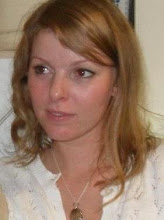
My name is Crystal Star Ransom. I am a Midwestern woman, raised in Michigan and living in Wisconsin, although I would eventually like to work my way out West where I was born. I have a small family; a seven year old daughter that is very bright and funny, a boyfriend who is an apprentice electrician for Solar Technologies, and a mysterious little black cat named Jack. I am working on my future at the University of Wisconsin in Oshkosh to become a high school science teacher- which, as corny as it sounds, is my dream job. I love to travel and do so regularly. My preferred vacation is the classic road trip in order to experience the remarkable amount of natural character our country has to offer in both its landscapes and people. I enjoy reading, a dominate trait in my family considering my grandmother was a librarian for 40 years, and will peruse it all- from science, math, and philosophy based non-fiction, to hip fiction, edgy memoir, and glossy alternative fashion magazines. I was raised to enjoy the outdoors which continually inspires my passion for the sciences. I like to forage for wild foods such as asparagus, mushrooms, and berries. I collect rocks and gems. I enjoy vintage fashion. I have a tremendous amount of religious, racial, and professional diversity in my family and have thusly come to thrive on tolerance.
My technology skills are fairly superficial. I am a PC user but I would like to become more familiar with Macs so that I can be Mac/PC ambidextrous. I am familiar with most word processing programs and use Microsoft Word primarily. I also have experience with the scientific data collection software LoggerPro from my chemistry and physics education. As many people do, I connect via social networking sites, namely facebook; although I like to keep my profile private. I am looking forward to learning more about technology and how to integrate it into my classroom and professional life. I welcome this opportunity to catch up on some of the advances in technology that I missed while I was not in school. I think that technology has become a vital part of our society and can be used as a powerful learning tool in the classroom.

My technology skills are fairly superficial. I am a PC user but I would like to become more familiar with Macs so that I can be Mac/PC ambidextrous. I am familiar with most word processing programs and use Microsoft Word primarily. I also have experience with the scientific data collection software LoggerPro from my chemistry and physics education. As many people do, I connect via social networking sites, namely facebook; although I like to keep my profile private. I am looking forward to learning more about technology and how to integrate it into my classroom and professional life. I welcome this opportunity to catch up on some of the advances in technology that I missed while I was not in school. I think that technology has become a vital part of our society and can be used as a powerful learning tool in the classroom.
Subscribe to:
Posts (Atom)